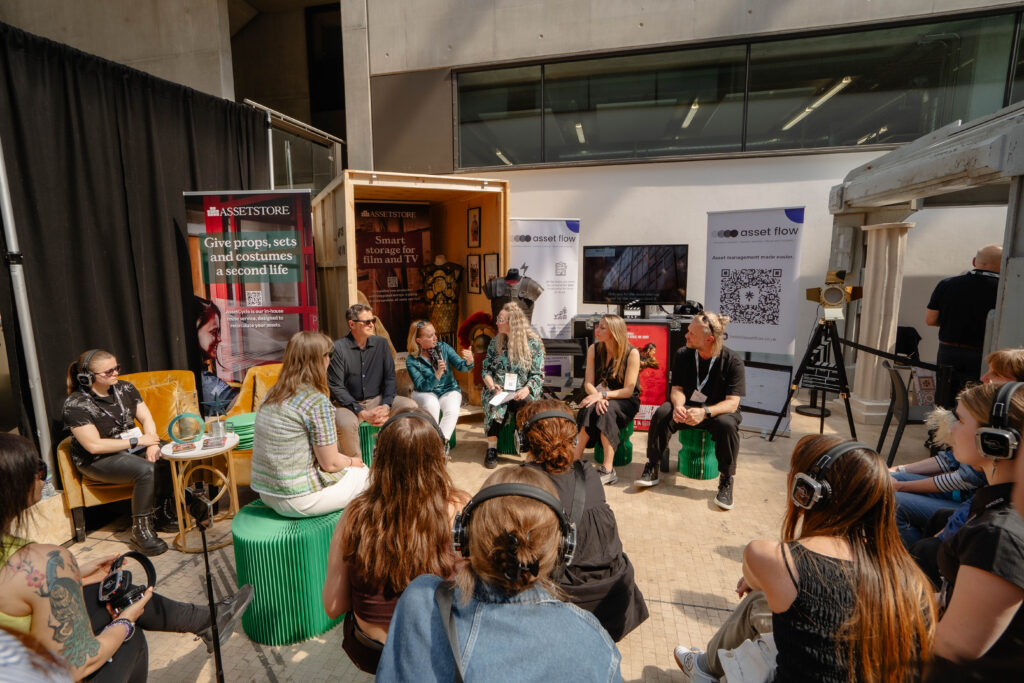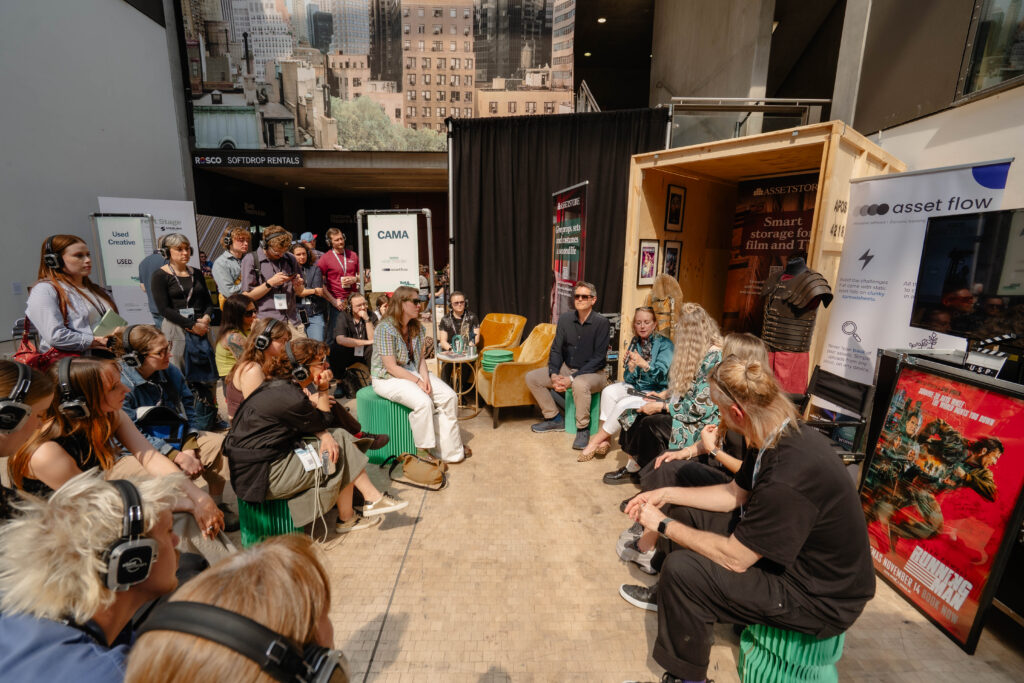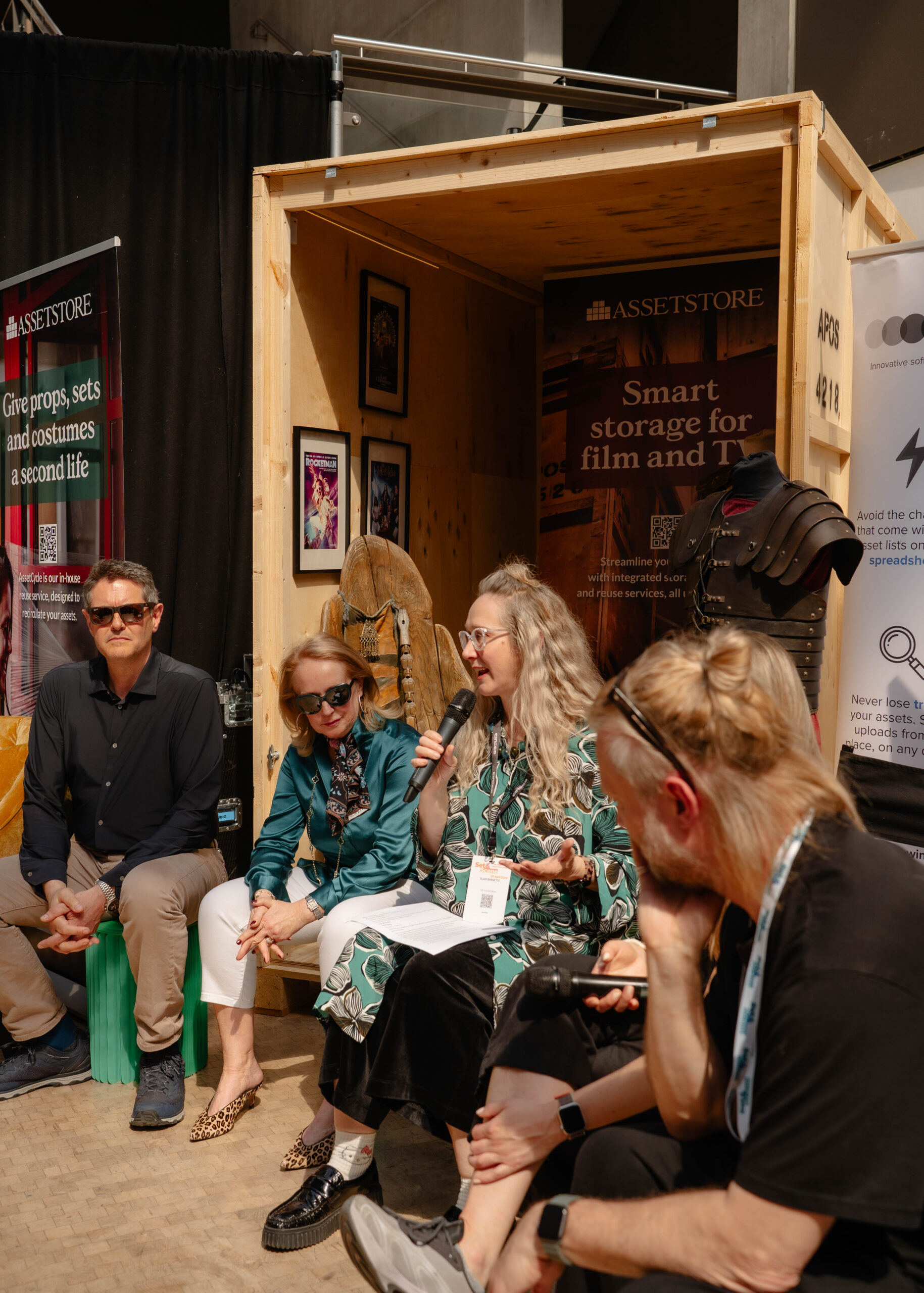
On 25 April, Michelle French and Michaele Apostolides, Co-Founders at CAMA, gathered with our colleagues from Used Creative and an inspiring group of asset managers, designers, art department and sustainability experts. Together, with circular economy champion and Production Designer Blaire Barnette, we explored a topic that’s transforming the production industry – building a circular economy for our creative industries.
Walking into the show at Set & Scene there was a real sense of shared mission. Everyone knows the “build, shoot, dispose” model has shaped film and TV for decades but equally, everyone there felt the urgency to change. Sets, props, and costumes don’t have to be single-use casualties. The day’s open conversation became a powerful showcase of collective ambition: to make every asset count and drive production sustainability forward.
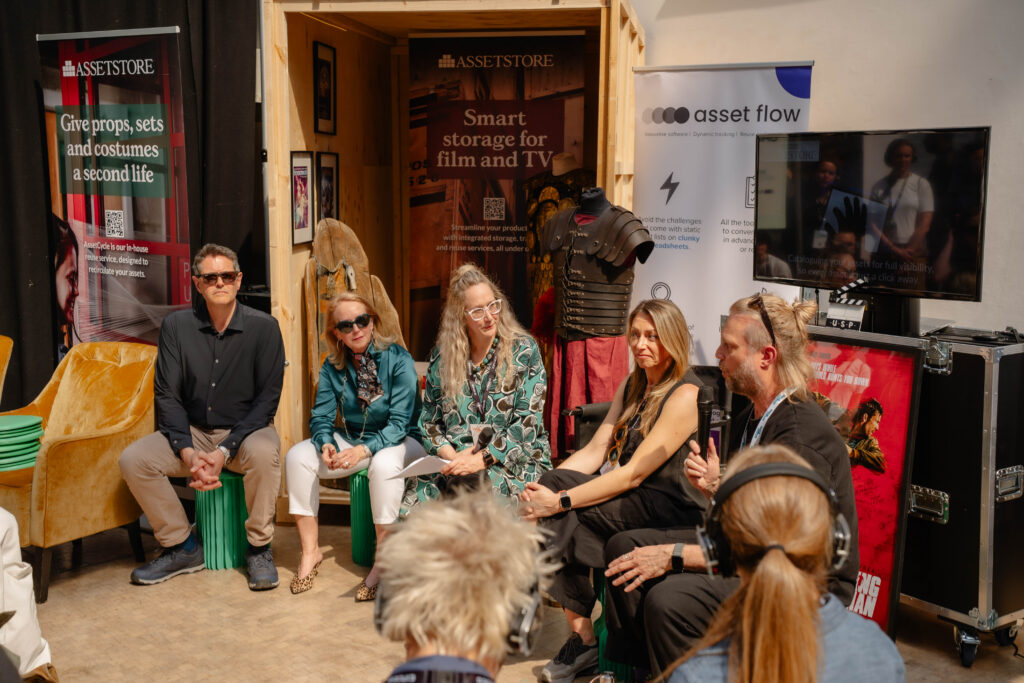
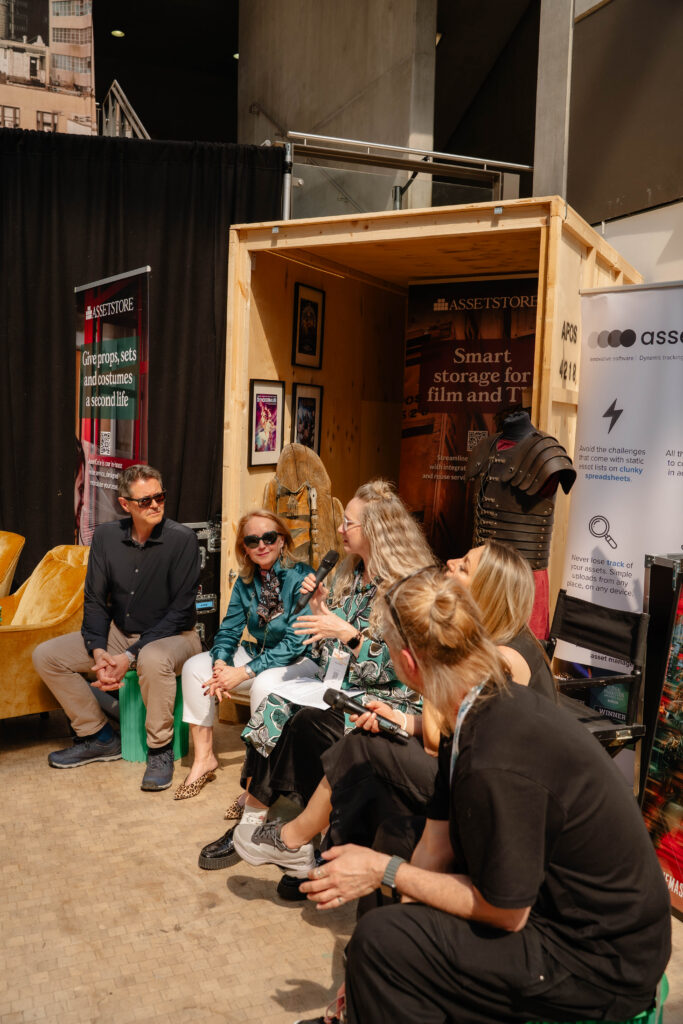
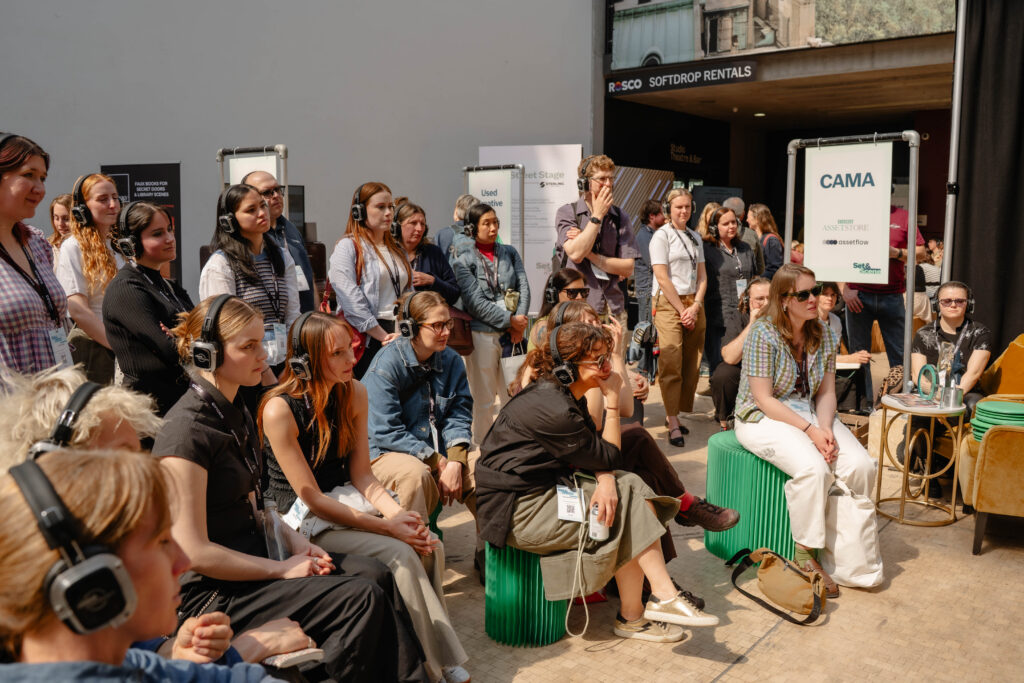
As we shared stories, swapped ideas, and drew on experiences from recent projects, a few themes stood out loud and clear. First and foremost—collaboration is key. Hearing about productions who’ve already embraced AssetCycle and found meaningful, affordable ways to give life to old sets and props was not just hopeful, but a proof of progress. There’s something incredibly satisfying about seeing creativity extended, with costumes or flats getting a second act rather than an unloved fate in landfill.
A huge takeaway was just how intertwined sustainability and cost-effectiveness can be. Dispelling the myth that greener practices mean bigger bills, we highlighted how the inclusion of tools like AssetFlow lowers barriers for everyone. When tracking, reuse, and management are built in without extra charge, even fast-paced or budget-conscious productions can join the movement.
Some guests raised valid questions about IP protection understandably, given the high stakes of unreleased plot points and proprietary designs. Our commitment remains absolute: 24/7 security, transparent digital tracking, and new guides in development to put minds at ease every step of the way.
Unpredictable wrap-ups were another big talking point. We all agreed that the mad dash at the end of a shoot is unlikely to disappear, but the group left energised by examples of how quick communication and tailored support can turn chaos into smooth, sustainable transition.
What truly energised us was the appetite for progress. Curiosity about how these ideas could ripple out to live events, theatre, and set construction has never been higher. The session closed with a sense that this circular momentum is just getting started.
We’re building stronger collaborations with charities, schools and community groups—because we know surplus assets can do real good. And we’re gearing up for a wrap strategy workshop this September, designed to help you navigate every last-minute challenge the industry can throw your way.
Looking back on the session, we’re reminded: sustainability isn’t a box-ticking exercise – it’s a collective journey. Thanks to everyone who joined us for sharing your honesty, creativity, and drive for better.